Materials
What is texture painting, and how is it made?
Texture painting explained: the artwork versus the wall finish, its materials, how the raised surface is built, and how to tell handmade from printed.
By the embossed.atelier studio · 27 Oct 2026
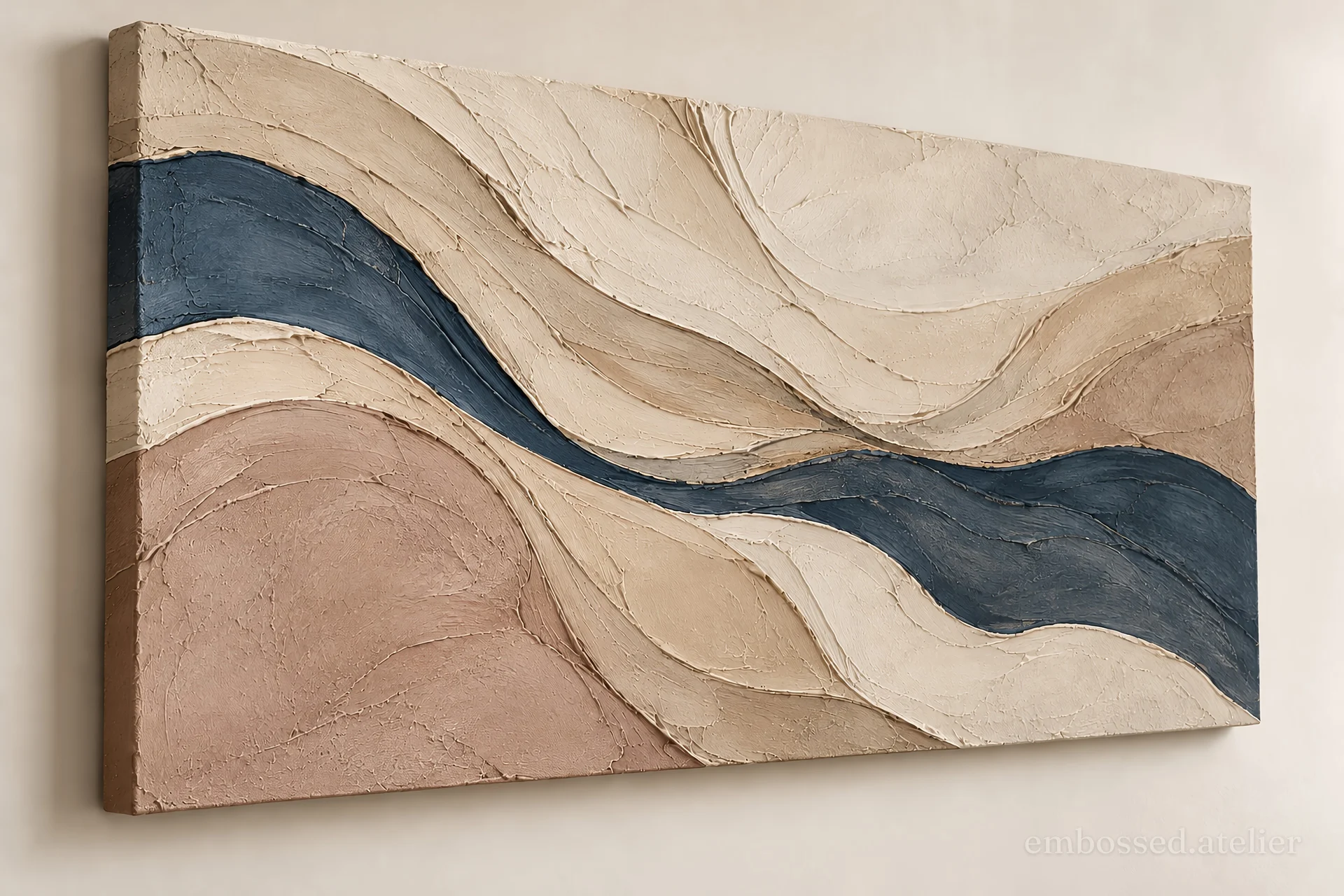
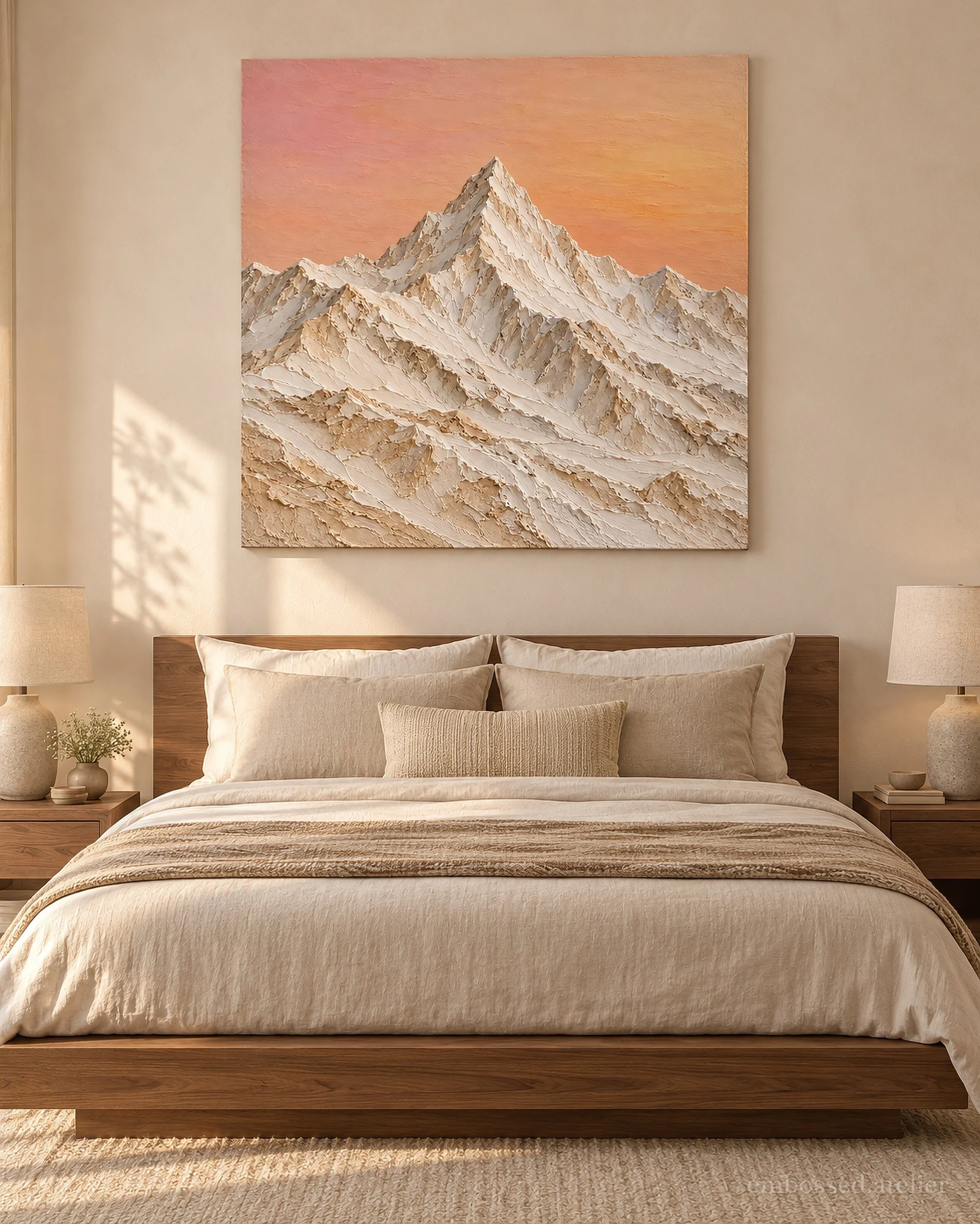
In India the words “texture painting” are used for two different things. One is a decorative finish a painter applies straight onto a wall, with textured paint and a trowel or comb. The other, the one this guide is about, is an artwork: a canvas or panel whose surface is built up by hand so it rises off the base and catches the light. You hang it like any painting, and it moves with you when you move house.
How it differs from a normal painting
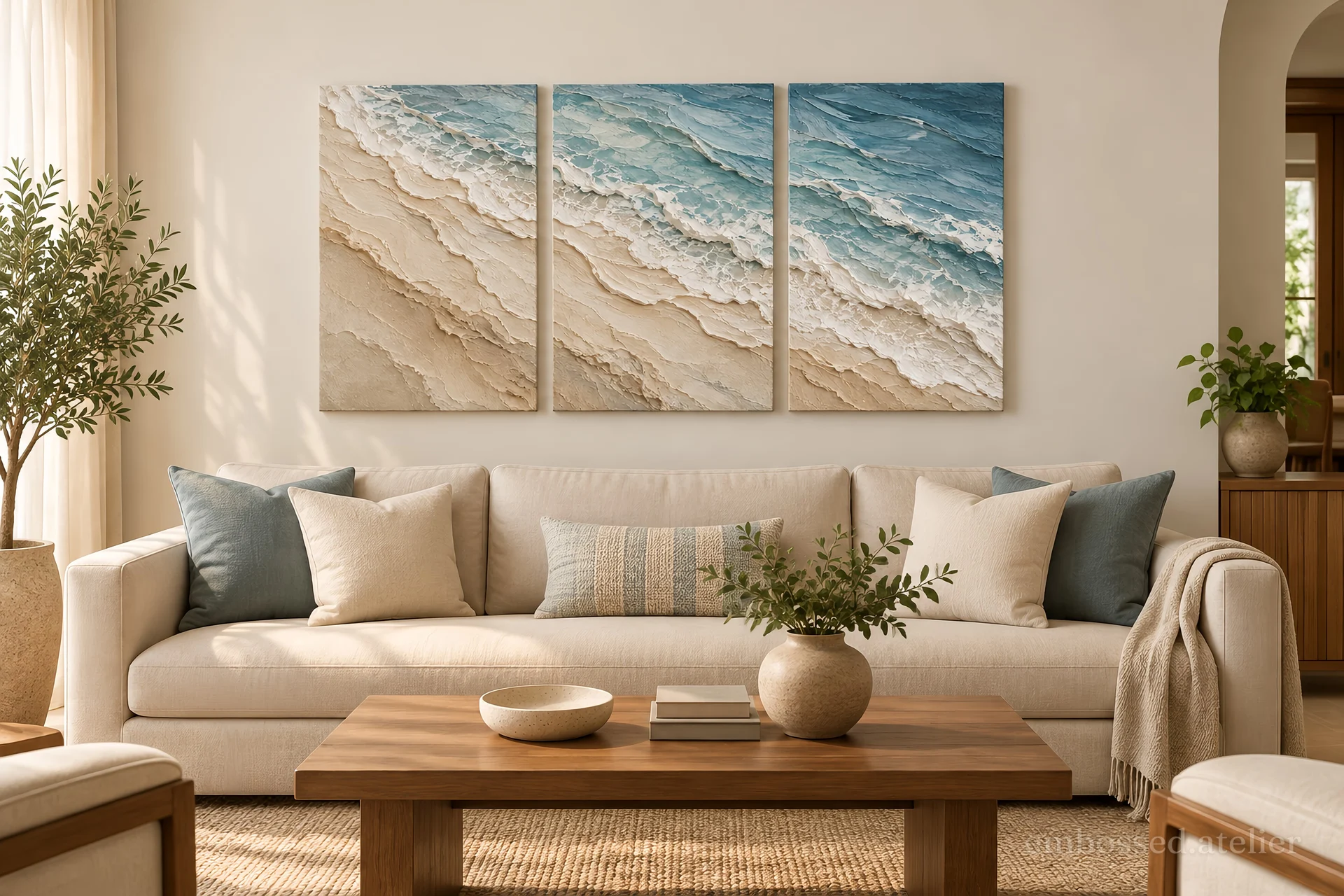
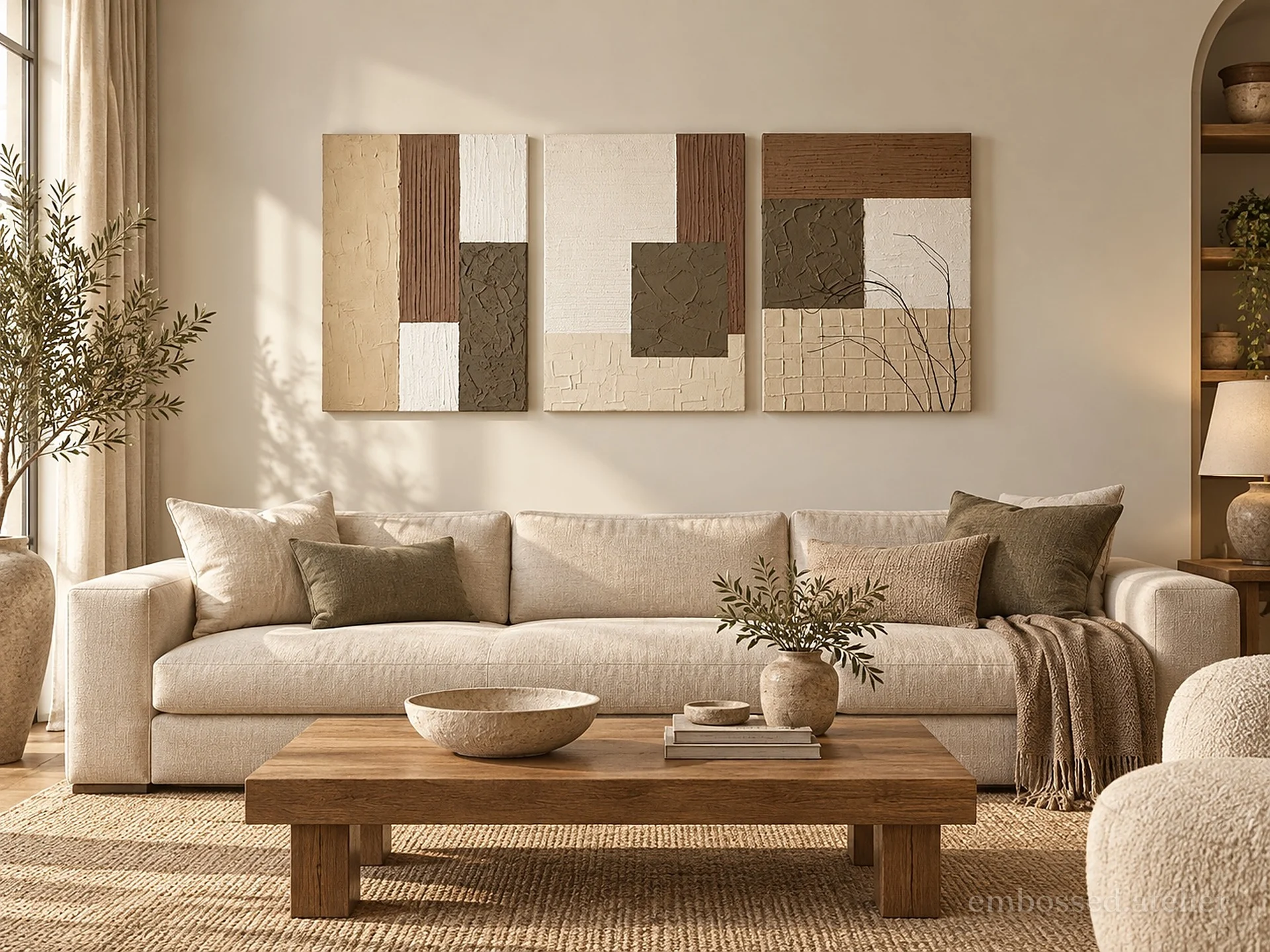
A normal painting is flat; its depth is drawn. In a texture painting the depth is real. Ridges, petals, waves or feathers stand off the canvas, so light from one side throws shadows across them, and the piece looks different in the morning, in the afternoon and under a lamp at night.
What it is made of
- A base: stretched canvas, or a handcrafted MDF panel for heavier relief.
- A primer, usually gesso, so the texture grips the surface.
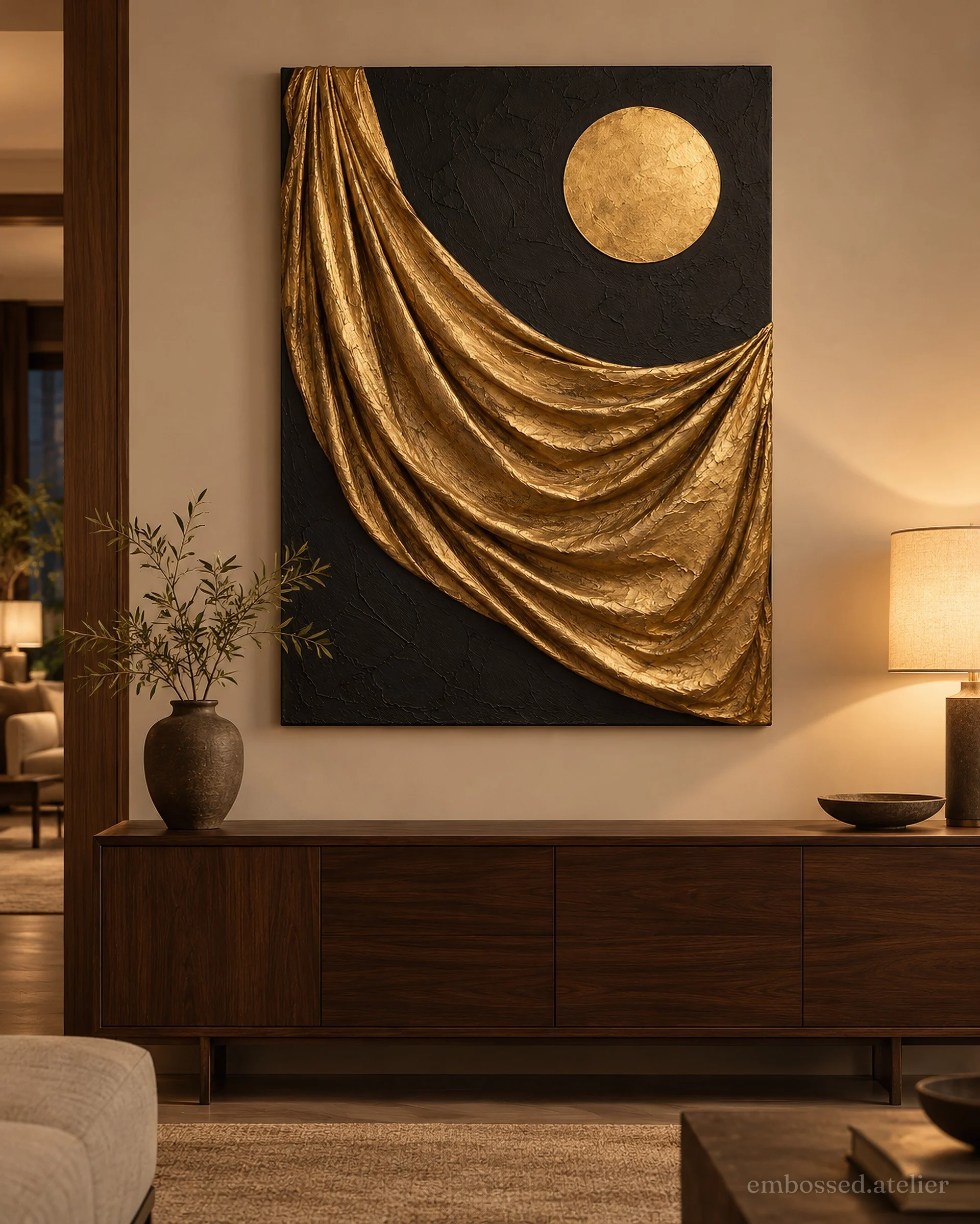
- The texture itself: clay, modelling paste, or both. Some pieces use other techniques, such as fabric draped in a plaster stiffener.
- Acrylic paint, and on some pieces gold leaf, gold foil or metallic detail.
- A varnish or protective clear coat to seal it.
Every piece's materials line on this site is taken from our own records, so you can see exactly which of these it uses before you order.
How it is made, step by step
- The design is drawn onto the primed canvas or panel.
- Clay or modelling paste is laid on with palette knives and shaping tools, thicker where the form should stand out.
- Deeper forms are built in layers, and each layer is left to cure hard before the next. This waiting is most of the making time.
- Once cured, the surface is painted, and any gold or metallic detail is applied by hand.
- The finished piece is sealed, photographed for you, and packed.
Because it is made by hand after you order, a standard piece takes 3–7 working days (8–12 working days for a large one), then about 2–5 working days in transit.
Handmade or printed? How to tell
- Look for a photo from the side. Real relief shows its edge and its shadow; a print looks the same from every angle.
- Read the materials. “Canvas print”, “UV print” or “vinyl” means the texture is printed, not built.
- Look closely at repeats. Hand-built texture is never quite identical from one petal or ridge to the next.
- Small variations in colour and texture are part of the craft, not defects.
Looking after it
Dust it gently with a soft, dry brush. Don't wipe it wet or use a cleaner, and keep it off a wall that gets damp. Raised edges can chip if knocked, so hang it where it won't be brushed against.