Materials
What is relief wall art?
Relief wall art explained: how a raised surface differs from a print, low and high relief, what the relief is made of here, and how to choose a piece.
By the embossed.atelier studio · 27 Oct 2026
Relief wall art is artwork whose surface is raised. The design is built up off its base, so it has depth you can see from the side and, in the right light, shadows of its own. A print or a painting is flat; a relief piece is partly sculpture. Depending on how far the forms stand off the surface, the same kind of work is also called textured wall art, 3D wall art or sculptural wall art.
Low relief and high relief
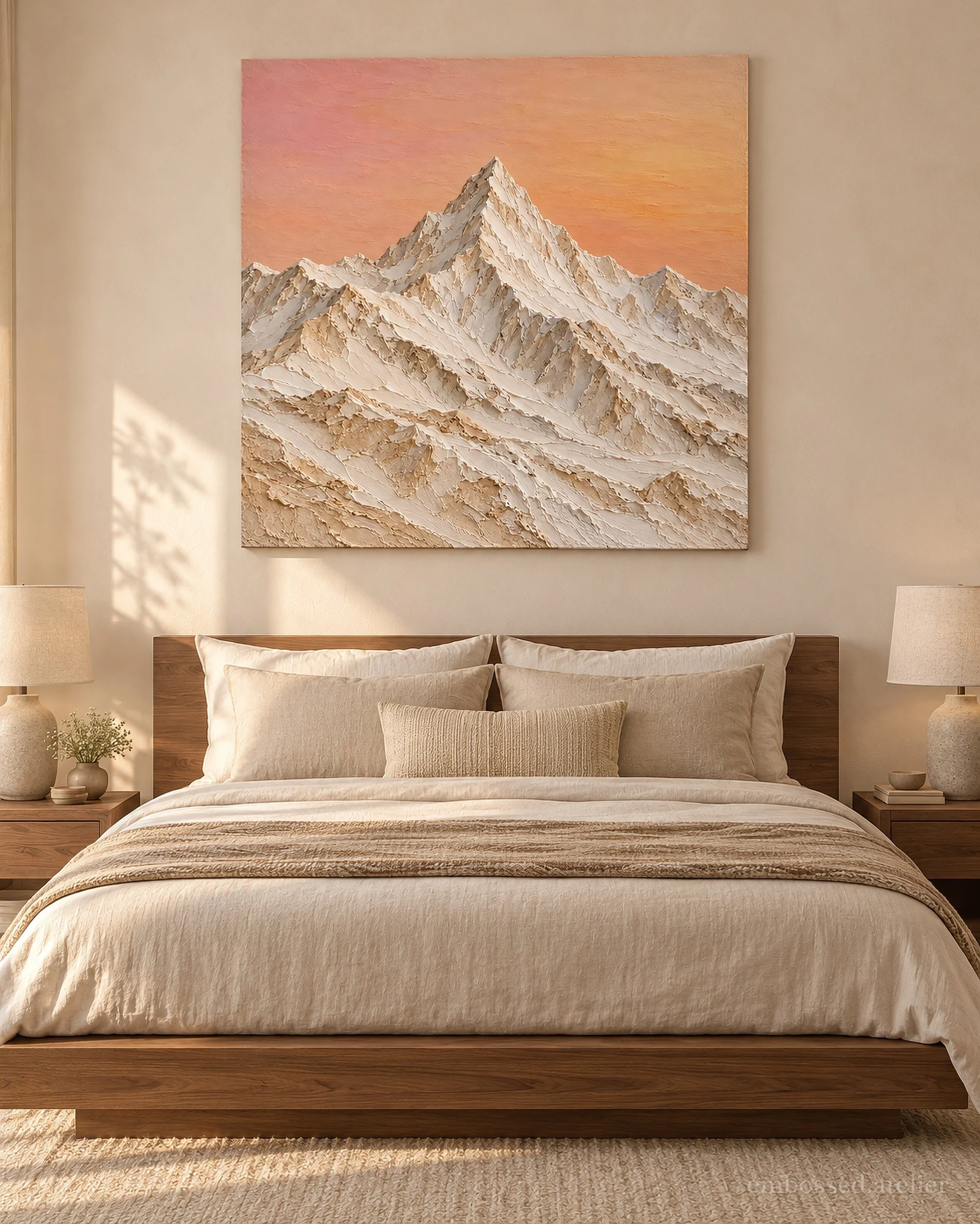
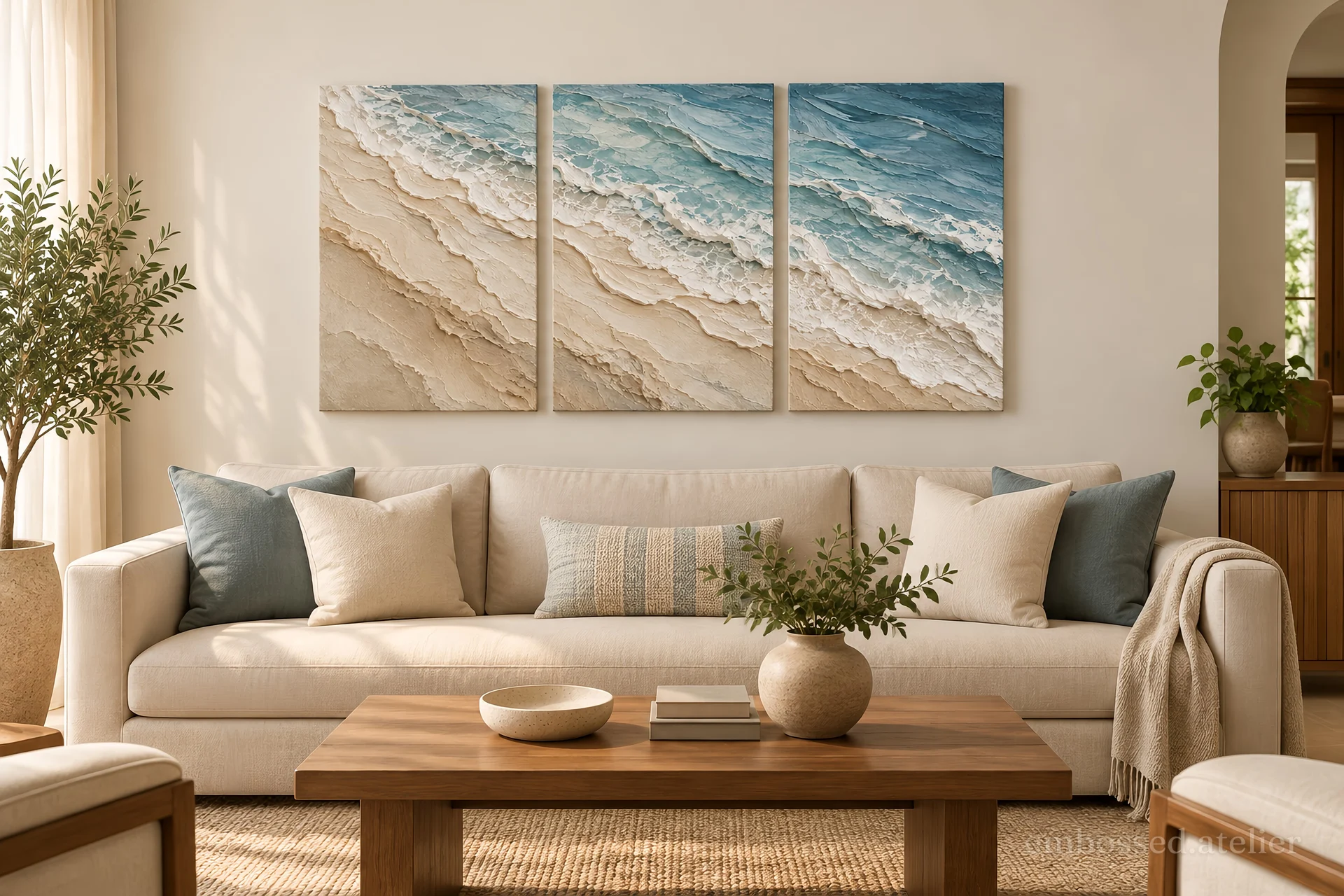
In low relief the forms rise only a little: ridges drawn into paste, leaf veins raised enough to hold a thin line of shadow, rows of arches across a textured ground. From across the room it reads as pattern and tone; up close, the texture shows.
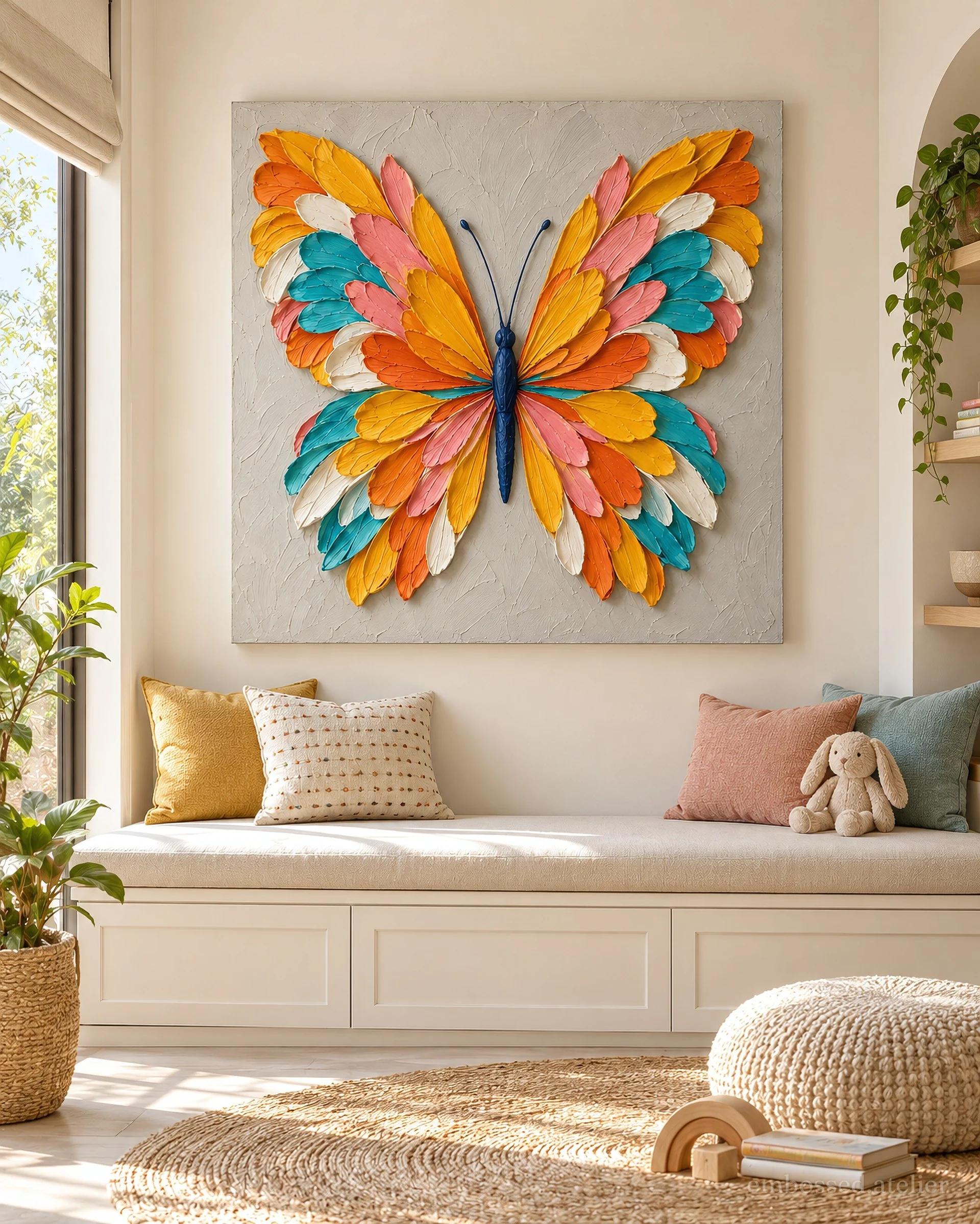
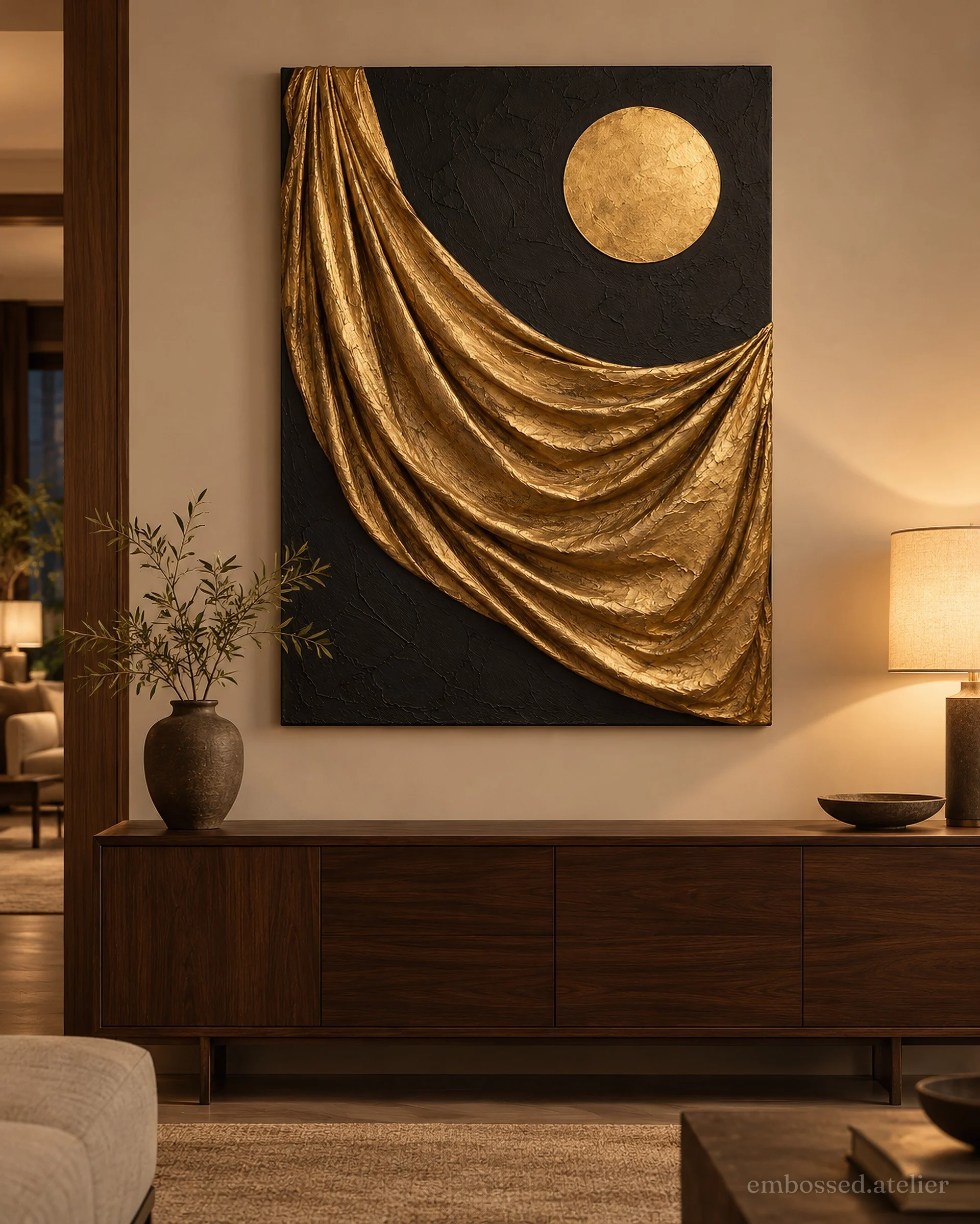
In high relief the forms stand well clear of the base. Feathers are layered so their edges lift away from the canvas, petals are sculpted one by one and set so they stand off the surface, and on some pieces real fabric is draped into folds and set hard. These read as objects as much as pictures, and they change the most as the light moves.
What the relief is made of here
Every piece in our collection is sculpted by hand in the studio after it is ordered. The relief is built in clay, modelling paste or both, on one of two bases: a handcrafted MDF panel or a stretched canvas. Each listing says which.
- Clay relief: petals, leaves, berries, lettering and symbols, built up and shaped by hand.
- Modelling paste: built up or drawn into with palette knives and tools, for feathers, craters, ridges and arches.
- Plaster-draped fabric, on some pieces: real fabric soaked in a plaster stiffener, draped into folds on the canvas and left to set.
- Gold leaf, gold foil or metallic accents, only where a piece's record says so.
Once the relief is shaped it is left to cure, then painted and sealed with a varnish or a protective clear coat. The materials line on every product page is taken from our own records, so what you read there is what arrives.
Not every piece is raised
A flat painting's listing says so plainly, for example “no texture paste”. If raised relief is what you want, the materials line will tell you before you order.
Why it looks different from a print
Because the surface is physically raised, light from one side throws shadows across it, and those shadows move as the light moves through the day. Light from straight ahead fills them in, so the same piece can look soft at one hour and deeply carved at another.
It is also why no two pieces are quite alike. The design, colours and size match what you order; the exact placement of each ridge is the maker's hand. Small variations in colour and texture are part of the craft, not defects.
Choosing relief for a room
- Side light shows relief most clearly: a wall beside a window, or one washed by a wall light or a lamp.
- High relief stands up to being seen from an angle, which suits a stairwell, a corridor or a wall you pass rather than face.
- Raised edges can chip if knocked, so hang a piece where it won't be brushed against, and clear of a headboard you lean on.
- Care is simple: dust with a soft, dry cloth or a feather duster, and never wipe it wet.
Most pieces can be made in your colours, and many in custom sizes. For a wall the collection doesn't fit, a commission is designed around it, with a sample panel you approve before the full piece begins.