Your space
Choosing wall art for a pooja room
How to choose relief wall art for a pooja room or home mandir: size, subject, placement, light from a diya, care near incense, colours and commissions.
By the embossed.atelier studio · 27 Oct 2026
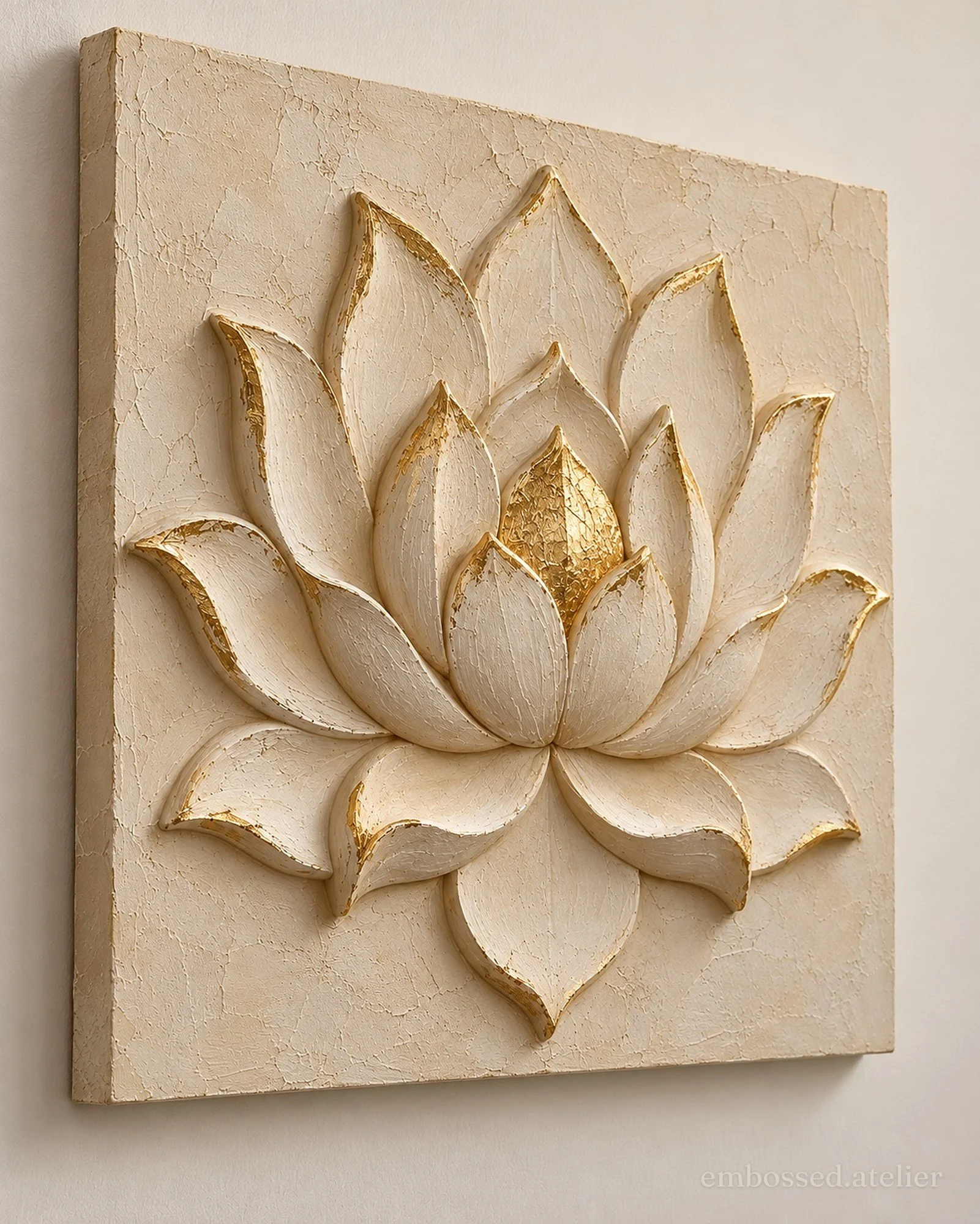
A pooja room is often the smallest and most personal space in a home: a room of its own, a mandir in a cabinet, or a shelf kept for prayer. Wall art there isn't decoration in the usual sense. It should be calm and clear, and made with care. This guide covers what we ask about when someone wants a piece for that wall.
Start with the space
- Measure the wall, or the back of the mandir, and note what stands in front of it: idols, photographs, a diya, flowers.
- A small space suits a small piece. One symbol on a square panel can be enough.
- If the piece hangs behind idols or photographs, let it sit above or around them rather than compete with them at the same height.
- Hang it where you see it during prayer, whether you sit or stand.
Choosing the subject
Devotional and folk pieces are one of the styles in the collection. A sacred symbol works well in relief because its form is simple and reads clearly. On one of our pieces, an Om is sculpted in clay and raised from a softly textured MDF panel, with the relief kept simple so the symbol stays calm and clear.
In a small space, one clear form usually sits better than fine lettering or a busy pattern. If you have a particular symbol, deity or verse in mind, that is a commission, made only for you.
Direction and placement
Many families have a direction in mind for the pooja corner. Tell us the wall, its direction and the space you have when you message, and we'll suggest a piece and a size to suit it.
Light from a diya or a lamp
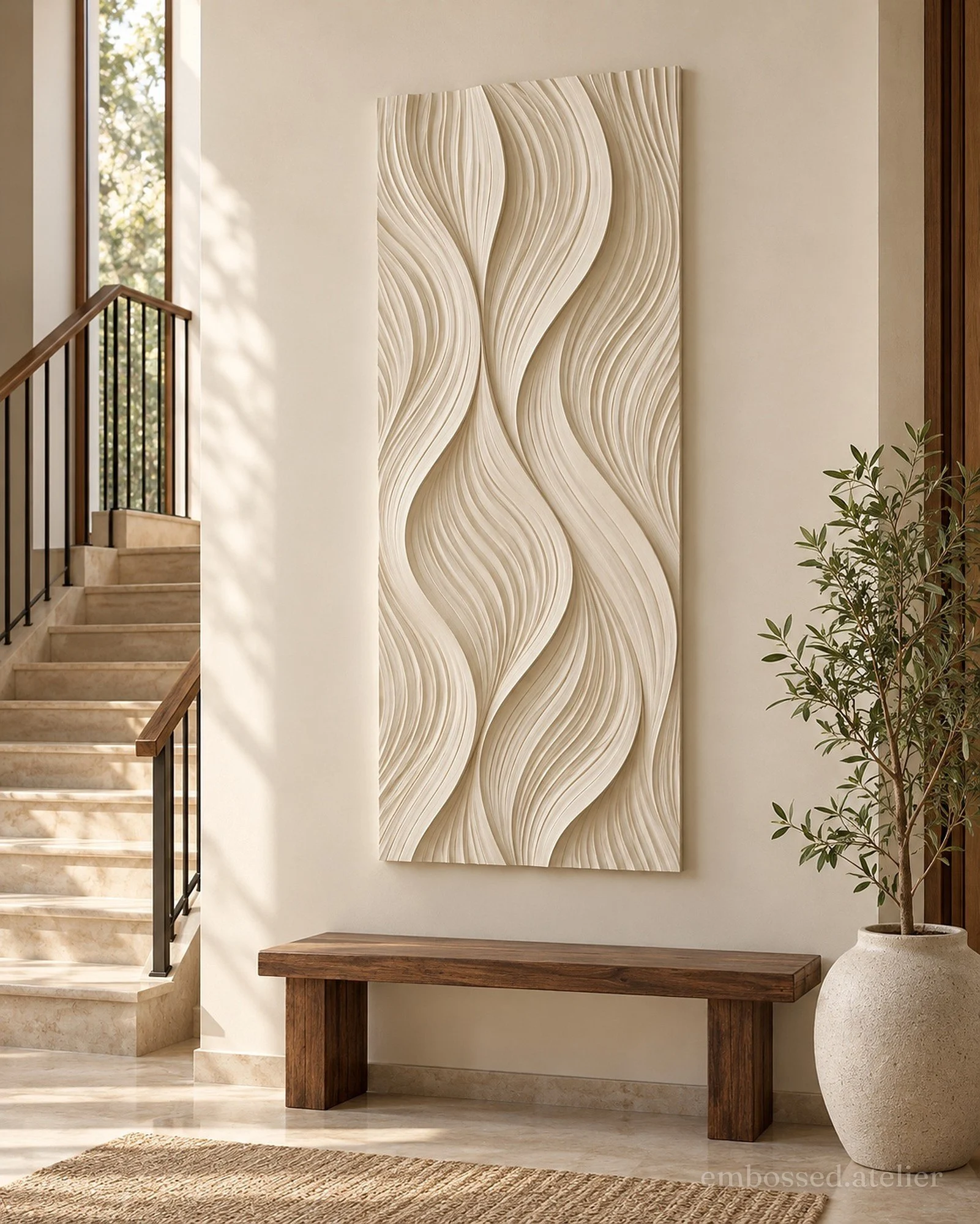
Relief shows most clearly when light reaches it from one side, and a pooja corner may already be lit that way: a diya on the shelf, a small lamp, a window to one side. Light from straight ahead flattens the texture. A warm, low light across the surface brings the shadows out in the evening.
Diya, incense and care
- Keep relief a little away from a diya flame and from incense smoke.
- Dust it gently with a soft, dry cloth or a feather duster. Never wipe it wet or use a liquid cleaner, including when the room is cleaned before a festival.
- Avoid a wall that gets damp.
- Gold or metallic detailing is sealed with the rest of the surface: dust it the same way and don't polish it.
Colours
Most pieces can be made in your colours. Tell us the wall colour and the colours of the mandir or shelf, and we'll suggest a palette before you order.
A piece made only for your family
A design made only for you is a commission. It starts with a photo and the measurements of the wall, then a sample panel in the real texture and colours, which you approve before the full piece is made. 15% to book and begin the sample panel, 35% once you approve the sample, and 50% before dispatch. If the sample isn't right, 90% of the booking is refunded.
If you want it in place for a festival
Every piece is made after you order. A piece from the collection takes about 3–7 working days to make, then about 2–5 working days in transit; a commission takes about two to three weeks end to end. For a festival or a housewarming, message early. Delivery is charged separately: it depends on your location and the piece, and we confirm it on WhatsApp before you pay. The price includes the piece and its packing.