Your space
How light changes textured wall art
Why raised relief looks different through the day, which walls and lamps show texture well, and how gold, dark grounds and deep relief behave in light.
By the embossed.atelier studio · 27 Oct 2026
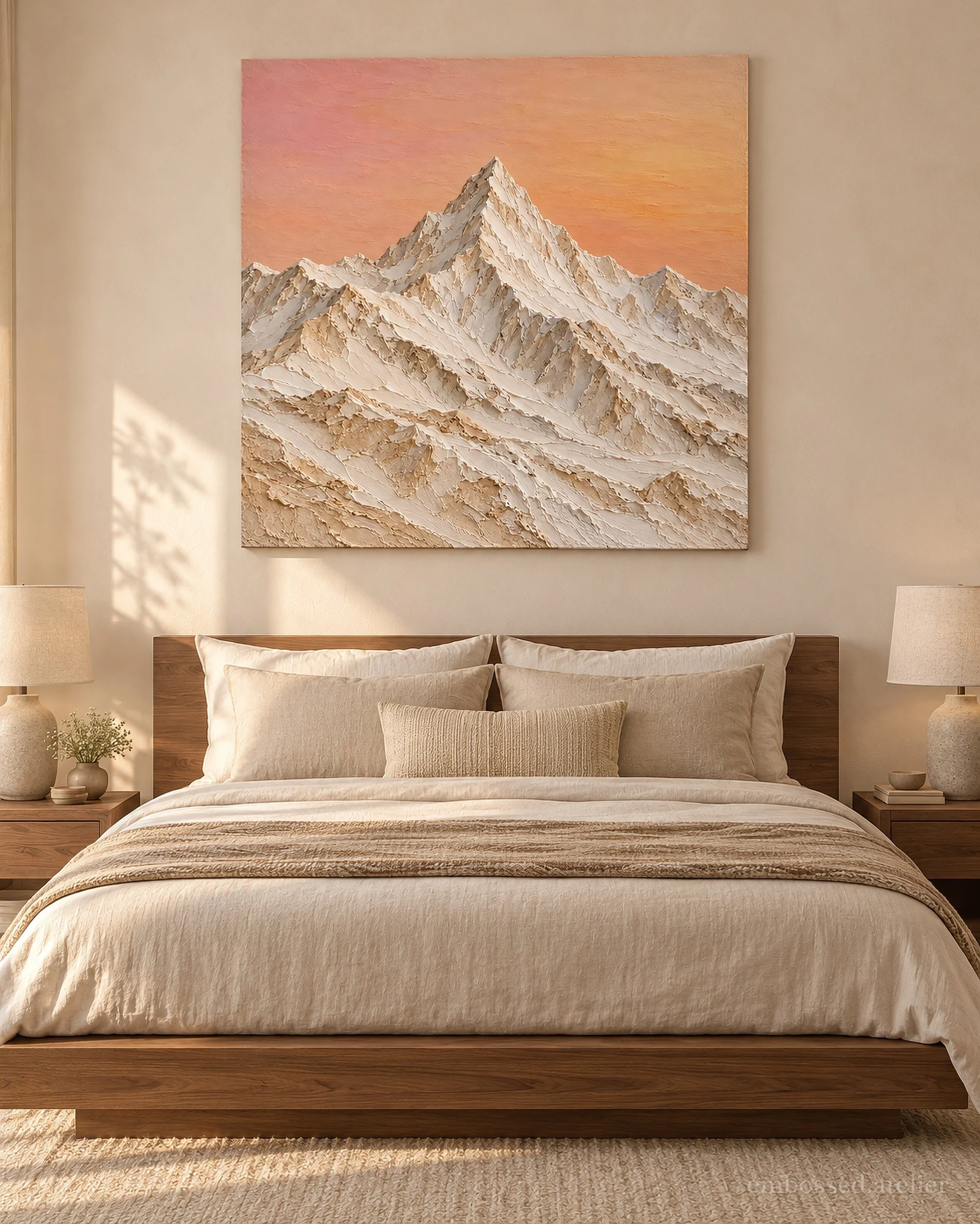
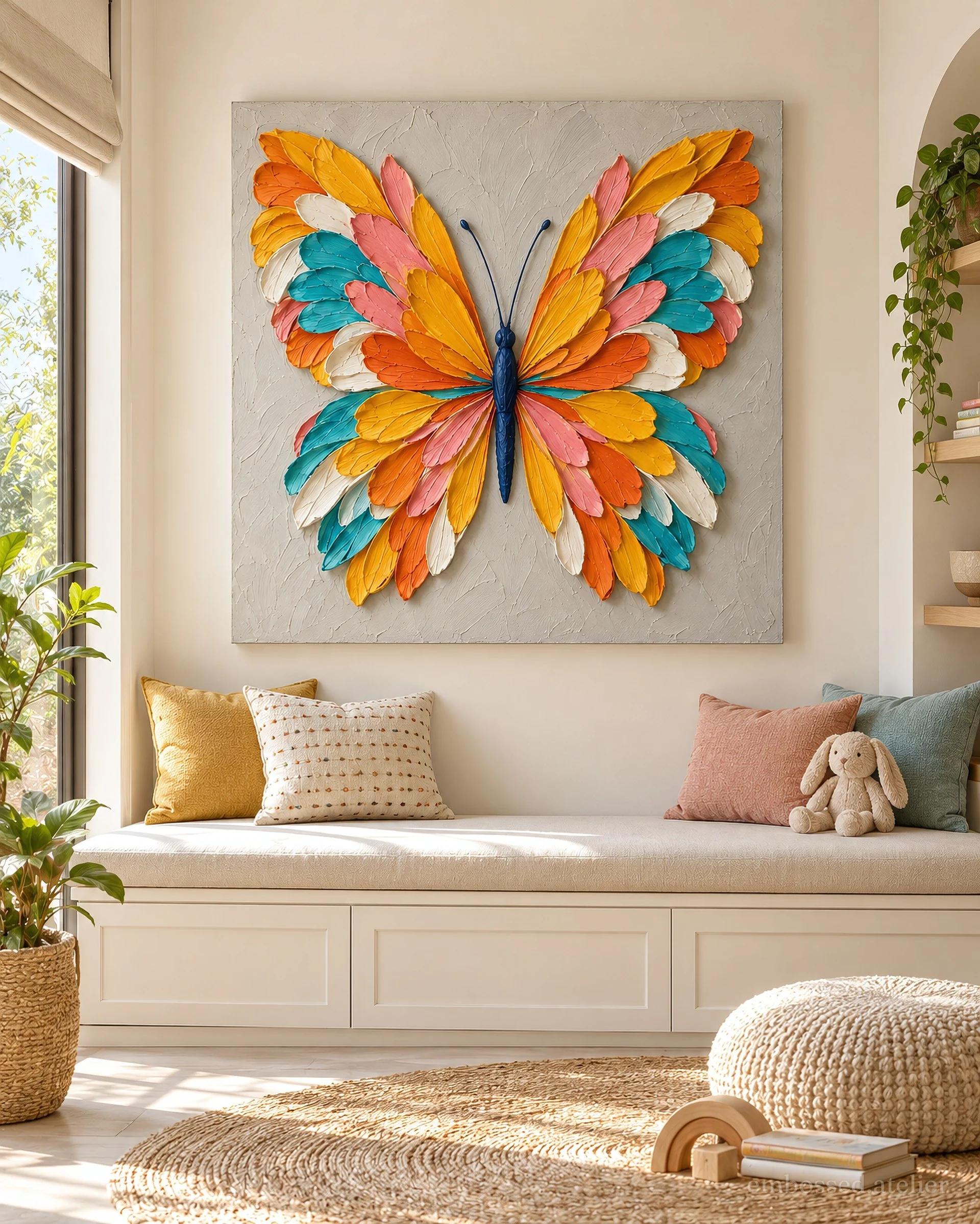
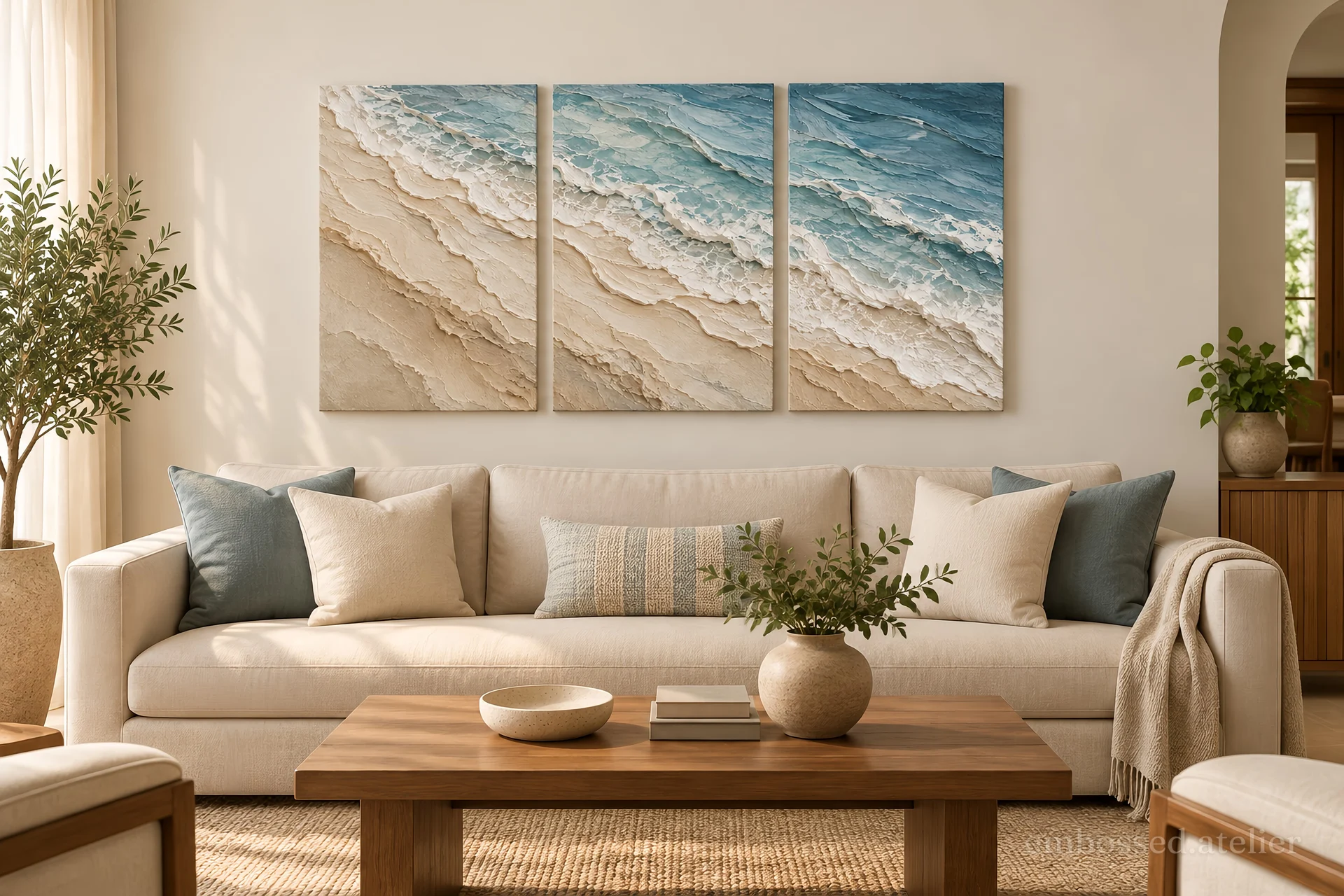
Textured wall art is partly made by its light. The relief is real, so every ridge and petal throws a small shadow, and that shadow depends on where the light comes from. The same piece can look soft, almost flat, at one hour and deeply carved at another. Knowing this before you choose a wall saves a disappointment, and lets a piece show all of its depth.
Side light shows relief; front light flattens it
Light that skims across the surface from one side catches the raised edges and leaves a shadow behind each one. That is what draws the design. Light from straight in front, such as a single ceiling light in the middle of the room or a camera flash, fills those shadows in, and the texture reads shallower than it is.
Where a listing has a photo taken from the side or at an angle, look at it: it shows the depth a front view can't.
Daylight through the day
As a general rule, daylight comes in low and warm early and late in the day, and higher and whiter around midday. A piece beside a window answers all of it, so it changes through the day without anyone touching it. Where the window sits matters more than how big it is.
- A wall beside a window, at an angle to it, gets light across its surface for much of the day. It usually shows relief most clearly.
- The wall facing a window gets light head-on, so relief looks quieter in the day and comes back in lamplight.
- A wall with no window near it depends on lamps, so plan one to the side.
Lamps and evenings
In the evening the lamps decide. A wall light, a floor lamp to one side, a bedside lamp or a desk lamp all show relief well, because each lights the surface from an angle. A single central ceiling light flattens it. If you can choose, put the lamp to one side of the piece rather than in front of it.
Gold, metallic finishes and dark grounds
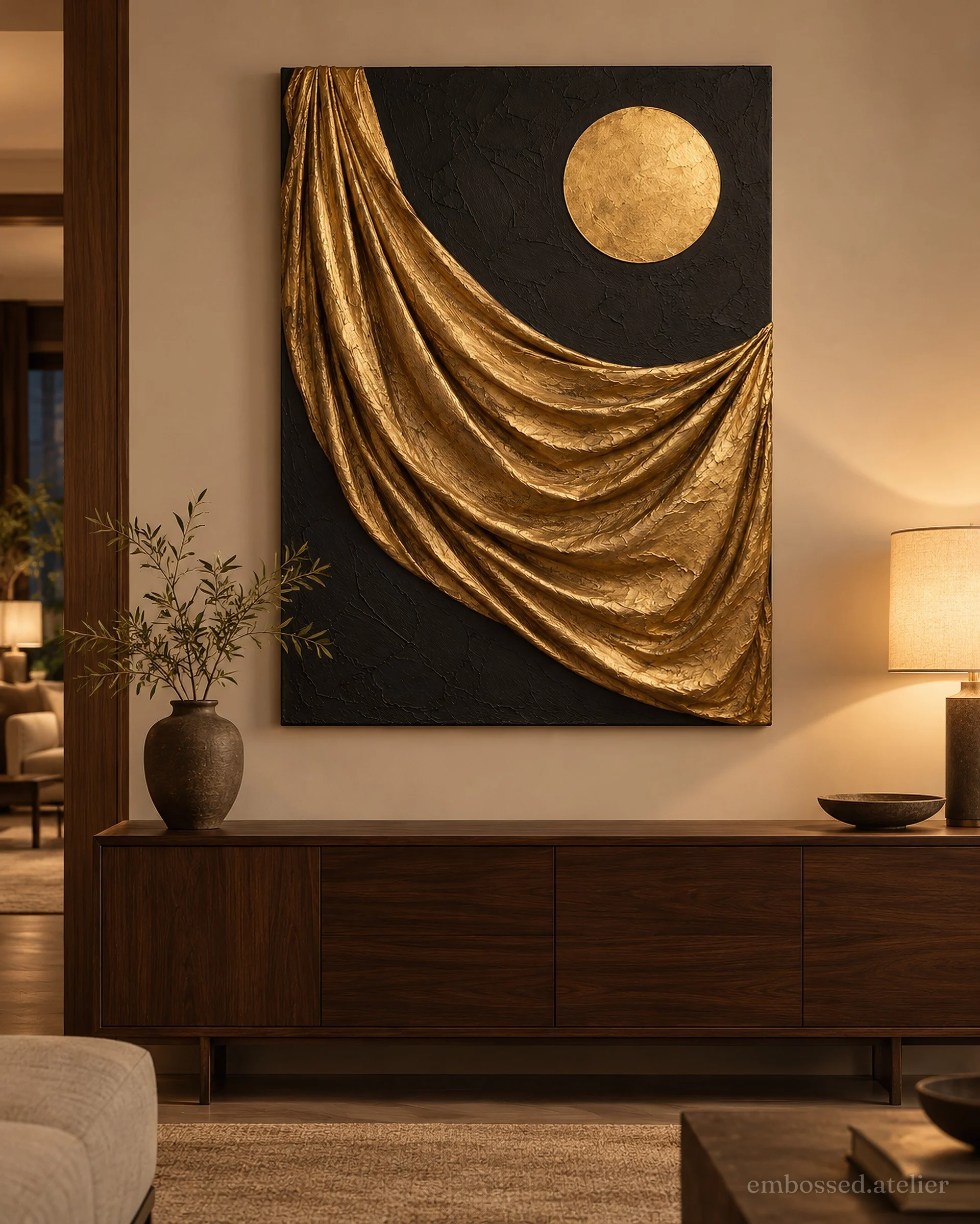
Gold leaf, gold foil and metallic accents reflect light as well as catching it, so they change more than the rest of the surface as you walk past or as the light moves. On one piece in the collection, gold and white petals on a matte black ground, the gold shifts as the light changes through the day.
Colour changes how much the shadows show. A single neutral tone, such as white, cream or beige, lets the shadows alone draw the design; matte white craters on a round panel hold real shadow. A dark ground with pale relief keeps its contrast when the light is weak.
Deep relief and shallow relief
Deep relief throws longer shadows and stays readable in weaker light. It also holds up when seen from an angle, which makes it a good choice for a stairwell, a corridor or a wall you pass rather than face. Shallow relief is subtler and wants good side light to show. If your wall gets little side light, choose a piece with deeper relief or stronger contrast.
Before you choose a wall
- Look at the wall at the times you use the room: mornings for a bedroom, evenings for a living room, working hours for a study.
- Notice where the lamps sit, and whether one could move to the side of the piece.
- Send us a photo of the wall in its usual light on WhatsApp. We'll suggest pieces, and colours, whose relief suits it.